Baraat Checklist for Delhi Weddings: Band, Ghodi, Baggi, Dhol & Lights
Shiv Band & Light House · Updated 11 October 2026 · 6 min read
The baraat is the loudest, happiest part of a North Indian wedding — and the part that goes wrong most easily when nobody owns the details. This checklist covers everything families in Delhi usually need to decide, in the order it makes sense to decide it.
Key Takeaways
- Fix 3 core basics first: wedding date, starting point, and venue address to size the band and route correctly.
- Decide the groom entry mode early: calm white ghodi with a handler, fresh floral baggi, or luxury royal rath.
- Follow the Delhi 10 PM rule: Under the Noise Pollution Rules 2000, outdoor loudspeaker music must conclude by 10 PM.
- Book 1 to 3 months in advance for auspicious wedding season dates in Delhi NCR.
- Book directly with one established house to coordinate band, ghodi, dhol, and lights under a single point of contact.
1. Fix the basics first: date, start point and venue
Before calling any band, know three things: the wedding date, where the baraat will start (home, a nearby gurudwara or temple, or a point close to the venue) and the venue address. These decide the route length, how big a band you need and how much lighting is required.
If the baraat starts close to the venue, a shorter route with a compact band works well. A longer route through a colony usually needs a bigger band and more lights so the procession does not feel thin.
2. Choose what the groom will ride
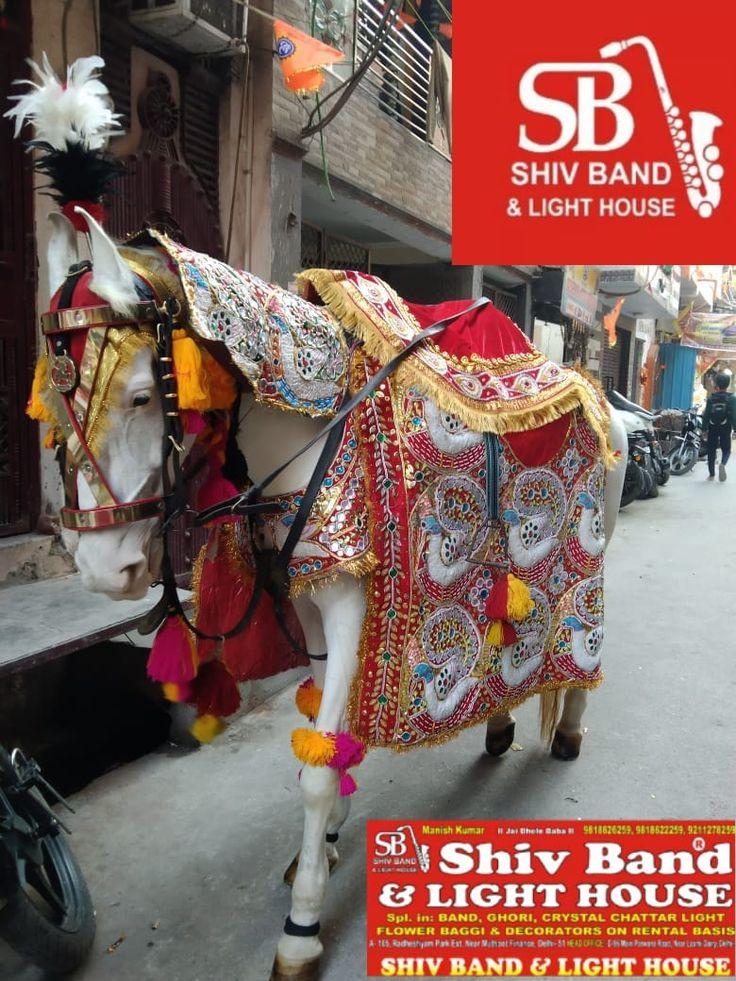
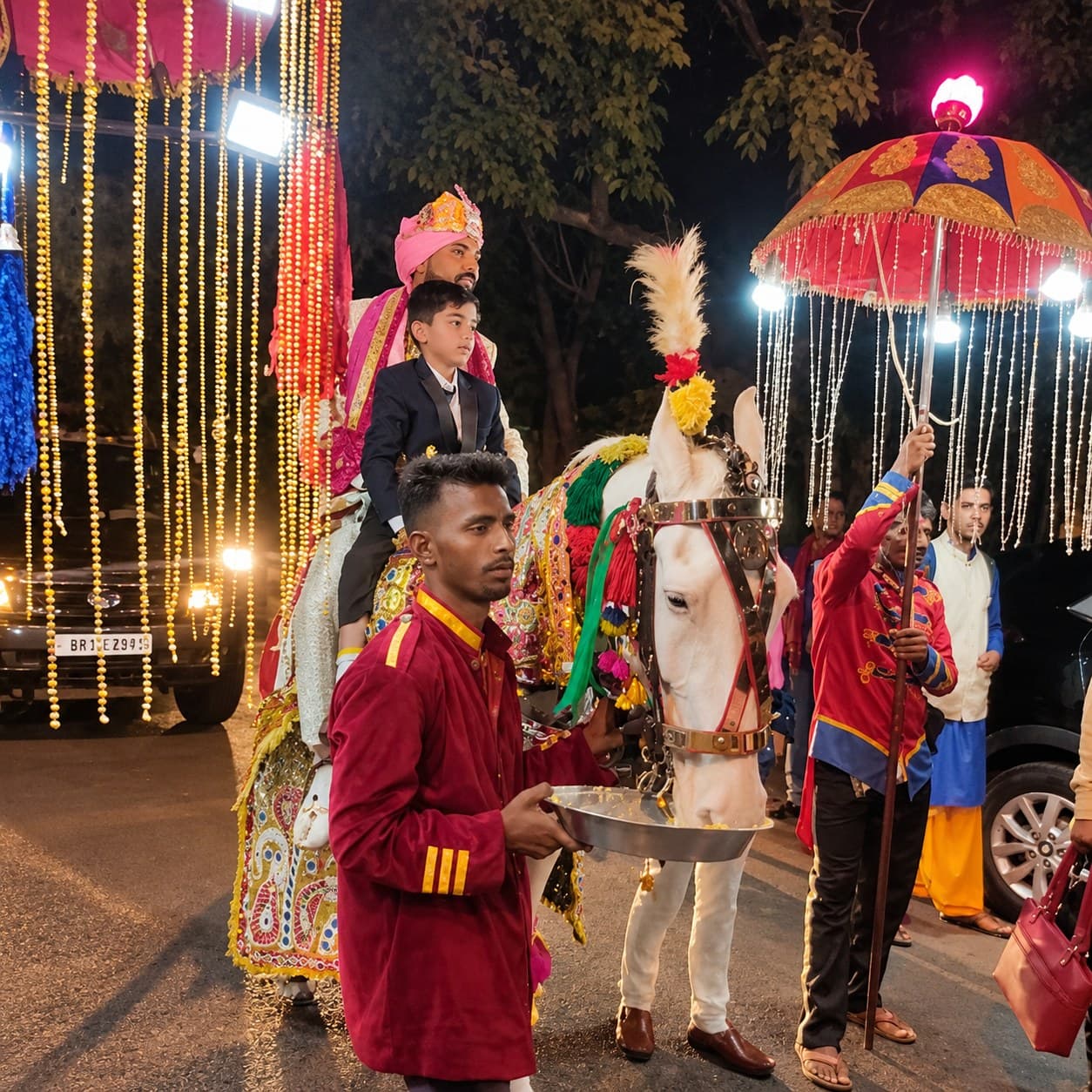
- Ghodi — the traditional choice for ghudchadi; ask that the ghodi is calm around music and lights and comes with a handler.
- Baggi — a horse-drawn carriage decorated with flowers; good when the groom rides with family or for the bride's entry.
- Rath — a larger chariot-style carriage for a grander entry.
- Vintage car — some families prefer it for short routes or for the vidaai.
3. Decide the music: band, dhol or both
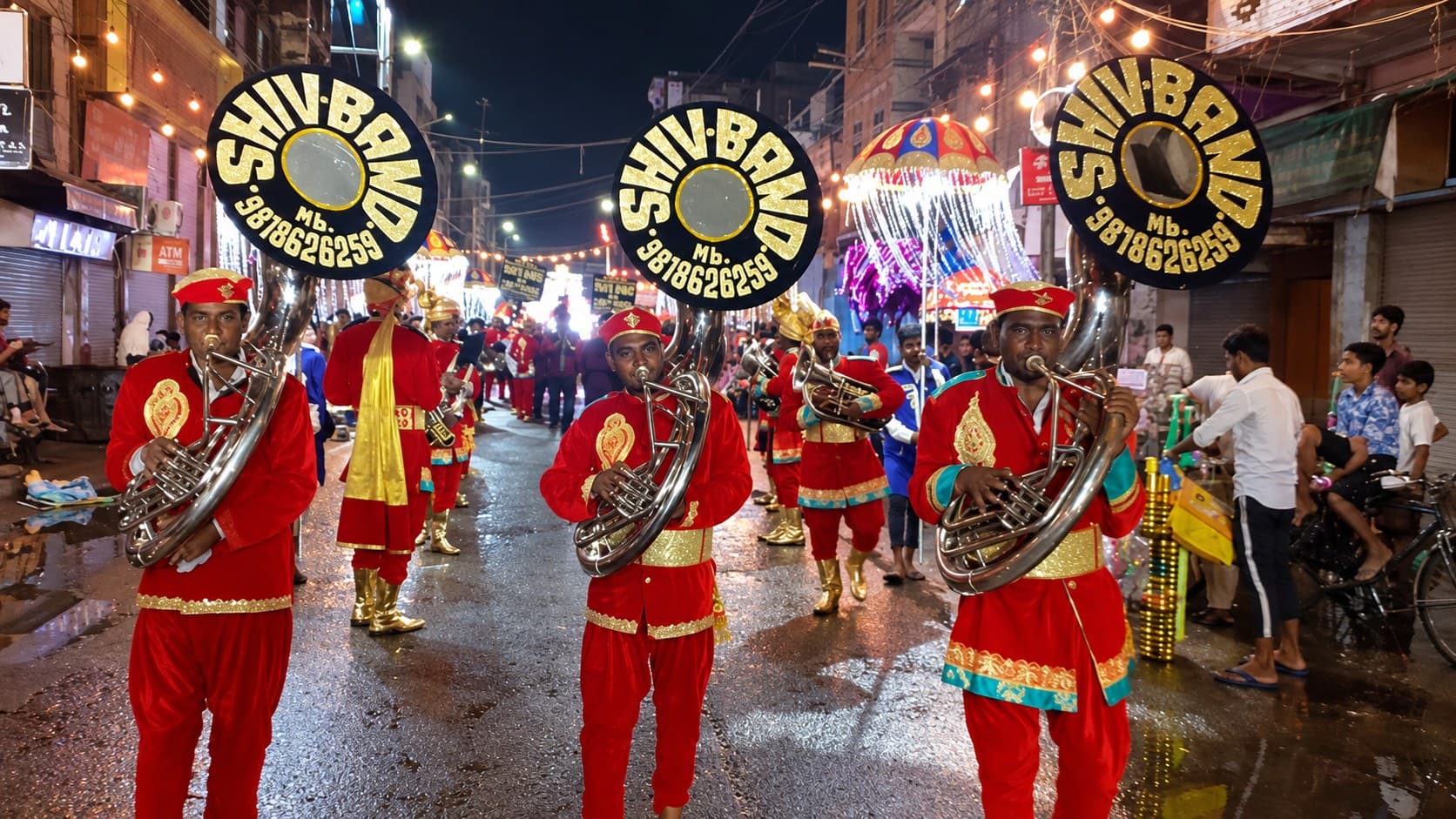
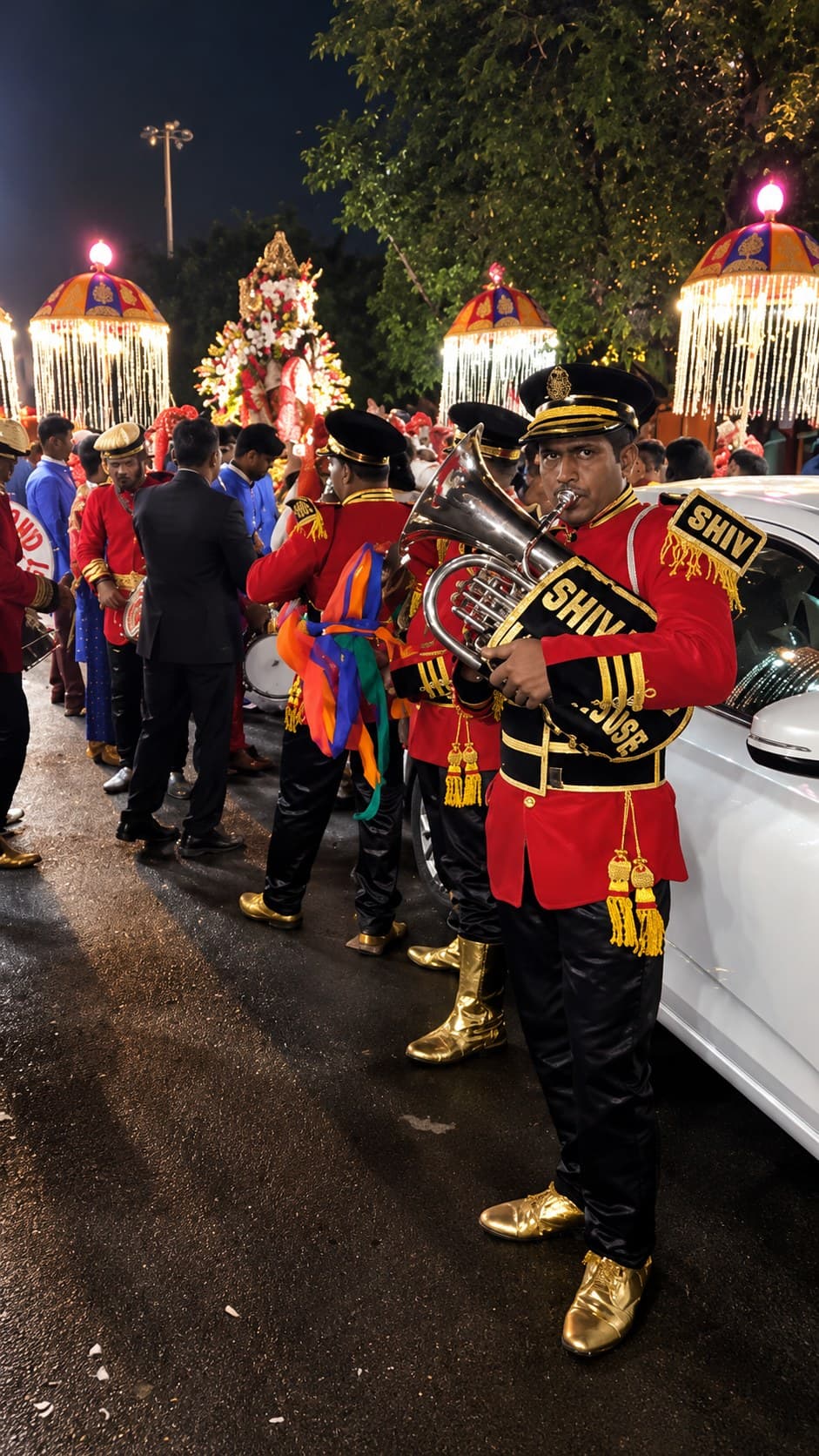
A uniformed brass band gives the baraat its classic sound — trumpets, clarinets and drums playing Bollywood and Punjabi songs. Dhol wale add raw energy for bhangra. Many families book both: the band leads, and dhol joins for the dancing stretches and the entry at the venue gate.
Share a list of the songs your family loves a few days before the wedding so the band leader can plan the set.
4. Plan lighting for an evening baraat
Most Delhi baraats happen after sunset, so lighting is what makes the procession visible and the photographs glow. Crystal chhatri lights carried along both sides of the baraat are the classic look; jhumar-style chandelier lights and road lights fill in longer routes. Ask whether the generator is a silent type so it does not drown out the music.
5. Respect the 10 PM rule
Under the Noise Pollution (Regulation and Control) Rules, 2000, loudspeakers and public address systems cannot be used in public between 10 PM and 6 AM. Build your timeline so the baraat reaches the venue comfortably before 10 PM. A good band will help you plan the start time backwards from the venue arrival.
6. Book early for popular dates
Auspicious dates in the wedding season are booked by many families at once. Once your date is fixed, confirm the band, ghodi or baggi and lights together — booking everything from one house means one phone number to call on the day.
7. The day-before checklist
- Confirm the reporting time and exact start point with the band leader.
- Share one family contact who will coordinate on the road.
- Confirm the route and where the ghodi or baggi will be ready.
- Keep the venue gate timing and the jaimala time in mind.
- Save the band's number on two family phones.